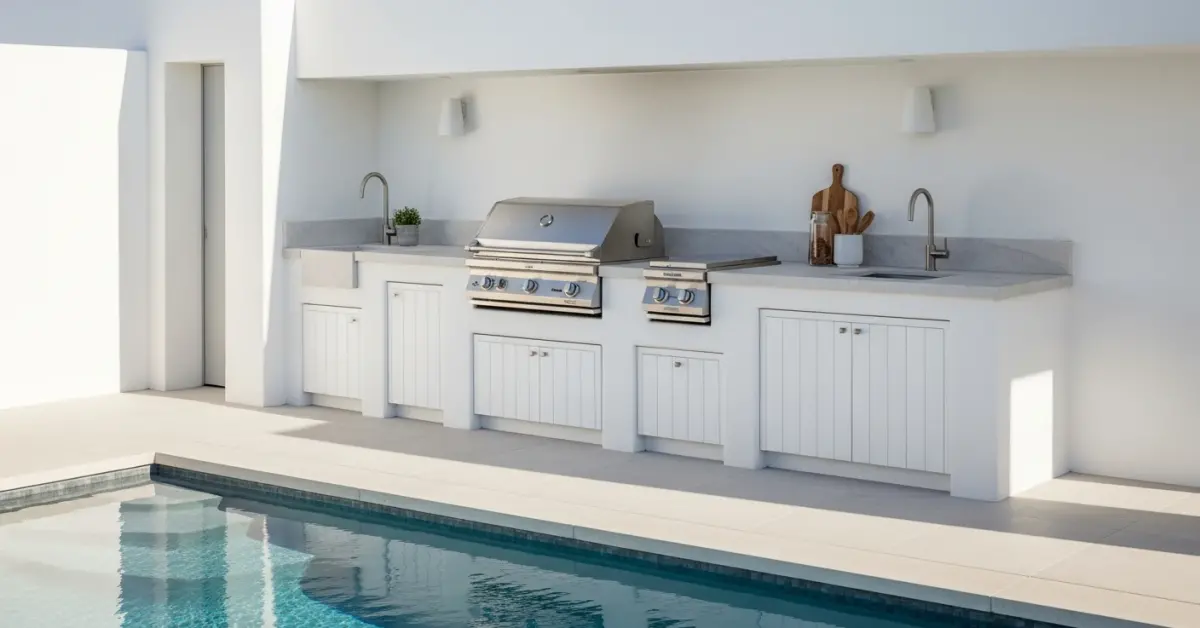
From my perspective building these projects hands-on, the single biggest miscalculation homeowners in the Boston area
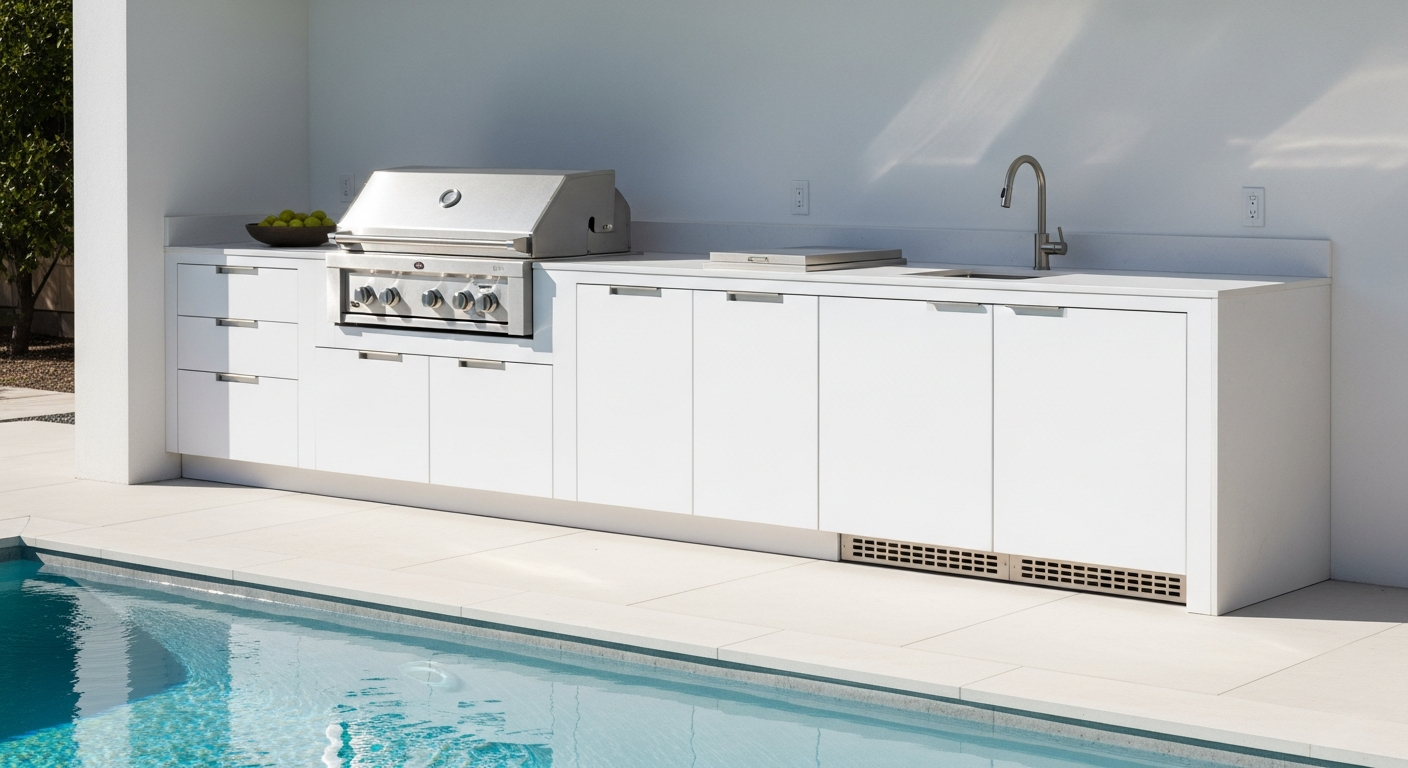
From my perspective building these projects hands-on, the single biggest miscalculation homeowners in the Boston area make with a white outdoor kitchen is underestimating the impact of our specific coastal air and pollen. They focus on the initial look, not the long-term material science. Success isn't about finding a cleaning product; it's about selecting non-porous, UV-stable materials from day one. A marine-grade polymer or a high-density porcelain slab will resist the yellowing and staining that plagues powder-coated metals and porous stones in our humid, salty environment.
- Material Integrity is Paramount: The core decision is choosing a material that is inherently white, not just coated. Materials like marine-grade HDPE (polymer) or certain quartz composites designed for outdoor use are superior to coated metals that can chip and rust.
- Countertop Porosity Matters: A white granite might look stunning initially, but its porosity makes it a magnet for pollen, mildew, and stains from spills. Non-porous options like Dekton or Neolith are a far safer long-term investment.
- Hardware is a Weak Point: Stainless steel hardware is a must. I specify 316-grade stainless steel for projects near the coast, as the more common 304 grade will show rust spots (tea staining) within a couple of seasons due to the salt in the air.
- Design for Drainage and Cleaning: Avoid intricate designs with tight corners and crevices where pollen and dirt can accumulate. A clean, minimalist design isn't just a style choice; it's a practical maintenance strategy in our region.
The Planning Failures That Lead to a Yellowing Kitchen
The most common failures I see are rooted in the showroom, long before a single cabinet is installed. A client falls in love with an indoor material or a design meant for a dry, arid climate and tries to force it into a Boston backyard. The result is almost always premature aging, discoloration, and regret.
The Most Expensive Mistake: Prioritizing Initial Cost Over Material Science
Choosing a less expensive, white powder-coated steel cabinet system to save a few thousand dollars upfront is a classic trap. I was called to a project in the Back Bay where the homeowner had done just that. Within three years, the relentless cycle of summer humidity and winter freezes had caused microscopic cracks in the coating. Salt air and moisture got underneath, and rust began bubbling up from beneath the white finish, staining the surrounding patio. The cost to replace the entire rusted modular outdoor kitchen system was nearly double the initial "savings." This isn't a rare occurrence; it's the predictable outcome of using materials not engineered for our specific coastal New England climate.
How a White Outdoor Kitchen Project Unfolds in Boston
A properly executed project is a phased process that balances design, material science, and local regulations. It begins not with a sketch, but with a site analysis to understand sun exposure, drainage, and proximity to trees that will drop pollen and leaves. This informs everything from material choice to the placement of the outdoor BBQ kitchen components.
Key Selection Criteria for a Boston Homeowner
When you're evaluating builders, the conversation needs to go beyond just price and portfolio. Here are the specific points I advise clients to press on:
- Material Sourcing: Ask for specific brand names of the polymers, compact surfaces, and stainless steel they use. Verify these materials have explicit outdoor and UV-stability ratings. A builder who can't name them is a red flag.
- Portfolio Longevity: Don't just look at pictures of new installations. Ask to see photos of a white kitchen they built 5+ years ago in the Boston area. This is the true test of their material choices and construction methods.
- Understanding of Local Conditions: Do they bring up issues like freeze-thaw cycles on countertops, managing oak pollen stains, or specifying 316-grade stainless for coastal homes? This demonstrates they have local, practical experience, not just general construction knowledge.
- Warranty Specifics: A contractor's labor warranty is one thing, but you need to see the manufacturers' warranties on the white materials against fading and staining. A 10- or 15-year warranty on the materials themselves is a strong indicator of quality.
Comparing Material Approaches for a White Kitchen
The term "white outdoor kitchen" can refer to several different construction methods, each with significant trade-offs in our climate. The choice you make at the outset determines the kitchen's lifespan and maintenance burden.
| Material / System | Upfront Cost | Durability & Stain Resistance | Long-Term Maintenance |
|---|---|---|---|
| Marine-Grade Polymer (HDPE) | High | Excellent (Impervious to moisture, UV-stable) | Low (Simple cleaning, no sealing) |
| Powder-Coated Stainless Steel | Medium-High | Good (Vulnerable to chipping/scratching, leading to rust) | Medium (Requires careful cleaning to avoid scratches, rust repair) |
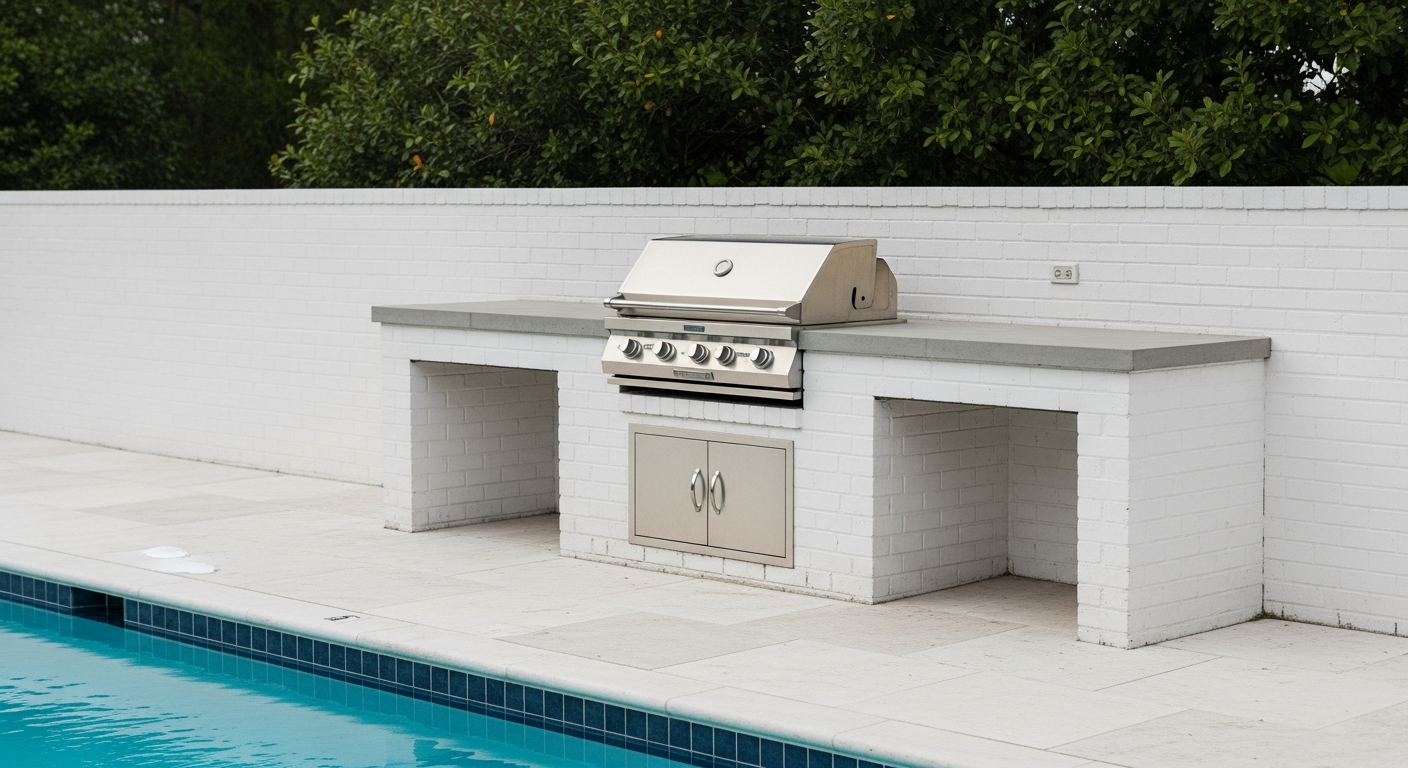
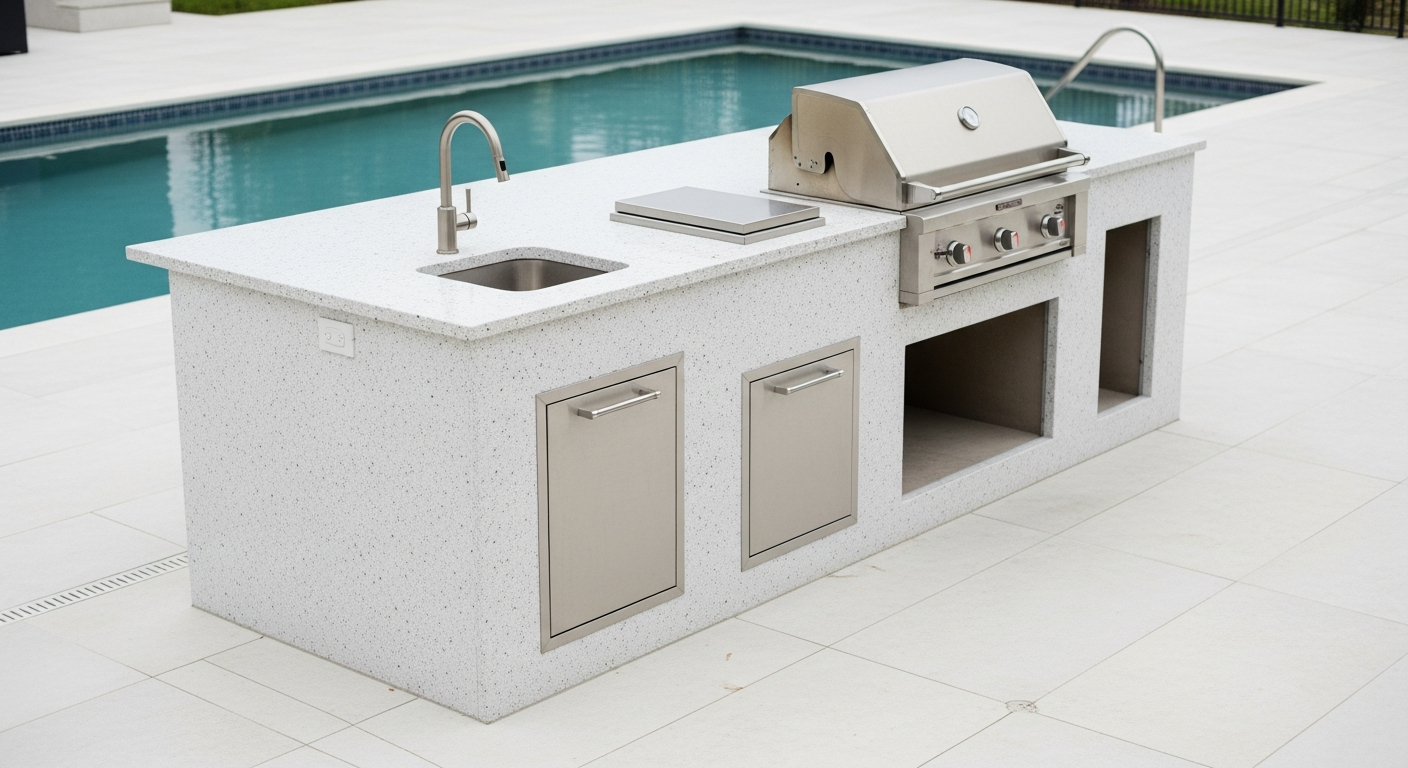
| Concrete/Stucco with White Finish | Medium | Poor (Prone to cracking in freeze-thaw, porous surface stains easily) | High (Requires frequent sealing and patching) |
When a White Kitchen is the Wrong Choice
A white kitchen is not the right fit if your primary goal is the absolute lowest maintenance possible. If your property is heavily wooded with mature oak or pine trees, the constant battle against tannins and pollen can be overwhelming. In these specific settings, a darker, multi-tonal color palette for your custom outdoor kitchen will be far more forgiving and look better over the long run with less effort.
Safe Hiring Checklist for Your Boston Project
Vetting a contractor for this specific type of project requires more than checking a license. You are hiring a specialist in material science as much as a builder.
- Verify Massachusetts HIC Registration: Any contractor performing more than $1,000 of work on a residential property must be registered as a Home Improvement Contractor. You can verify this online through the state's official website.
- Request a Certificate of Insurance: They must provide proof of both general liability and worker's compensation insurance. Do not accept an expired certificate or a verbal confirmation.
- Check Their Contract for Material Specifications: The contract should list the exact brand, model, and color of the cabinetry, countertops, and appliances. Vague terms like "white outdoor cabinets" are unacceptable.
- Inquire About Past Permit Approvals: Ask if they have successfully pulled permits for similar outdoor kitchen projects in Boston or neighboring towns like Brookline or Cambridge. This shows they understand the local code requirements. A typical permit fee for such a project can range from $200 to $500, depending on the scope.
- Discuss Site Preparation and Utility Work: A professional plan includes details on running gas and electrical lines, ensuring proper grading for drainage, and protecting the surrounding landscape. Ask who is responsible for this work—them or subcontractors.
Decisions That Determine the Final Outcome
Two clients can start with the same budget and vision for a white outdoor kitchen, but end up with vastly different results. The difference almost always comes down to a few key decisions made before construction begins.
The Moment Most Homeowners Get It Wrong
The critical mistake happens when the conversation shifts from "what is the best material for my environment?" to "how can we get the look I want for cheaper?" This pivot point is where long-term quality is sacrificed for short-term savings. My most successful projects are with clients who treat the material selection as a technical investment, not a cosmetic expense. We choose the cabinet system (like a marine-grade polymer) and countertop (like a sintered stone) first, based on performance, and then design the layout and select appliances to fit the budget that remains. Reversing this process is the single most common path to a disappointing outcome.
Practical Answers for Building in the Boston Area
Navigating the logistical and regulatory side of an outdoor kitchen project in Boston has its own set of challenges. Understanding these upfront prevents delays and unexpected costs.
Navigating Boston's Permitting for Outdoor Kitchens
Any outdoor kitchen involving permanent gas or electrical lines requires a permit from the Boston Inspectional Services Department (ISD). The process involves submitting plans for review, which must show the location of utilities, the structure's foundation, and compliance with setbacks from property lines. A licensed plumber and electrician must pull their respective permits for their portion of the work. Expect the plan review process alone to take 4-6 weeks.
Working Within Historic District Constraints
If you live in one of Boston's historic districts (like Beacon Hill or the South End), your project will also require approval from the local historic district commission. Their review focuses on visibility from public ways and the appropriateness of materials. A sleek, modern white kitchen may face significant scrutiny. In these cases, we often design the kitchen to be shielded by landscaping or choose materials and colors that are more in keeping with the historic character of the neighborhood.
The Impact of Freeze-Thaw Cycles on Material Choices
This is a non-negotiable factor in our climate. Any porous material, like concrete or natural stone countertops, will absorb water. When that water freezes in winter, it expands and can cause cracks and spalling. This is why I steer clients away from tiled countertops outdoors and strongly advocate for non-porous materials like sintered stone or high-grade polymers that are impervious to water absorption and immune to damage from freeze-thaw cycles.